A competitive online business helps customers understand its offer, assess its credibility and take the next step easily. Progress requires a functional website, useful content, consistent service and meaningful measurement. Digital investments deliver value when they address specific needs and match the capacity of the people responsible for implementing them.
- Explain whom you serve, which problem you solve and what your offer includes.
- Make your website useful and easy to navigate, particularly on mobile.
- Support your claims with real projects and specific information.
- Measure qualified enquiries, sales and service quality alongside website traffic.
A competitive online business gives customers specific reasons to choose it and meets the expectations it creates. Good design, advertising and social media posts all play a role. They need to work alongside a clear offer, straightforward communication and reliable service.
What does a competitive online business look like?
A competitive online business attracts relevant customers, explains its value clearly and delivers on its promises. That ability depends on both its online presence and its everyday operations.
Your online presence is the collection of places where your business appears and communicates on the internet. It includes your website, business profiles, content and communication channels.
You do not need to invest equally in every channel. An engineering consultancy might prioritize search visibility and project presentations. A fashion retailer may need to invest more heavily in product photography and social media.
Consistency matters across both examples. If an advertisement promises a prompt quote but the enquiry goes unanswered, the experience fails to match the message.
To assess your own position, examine where customers currently encounter difficulties. That may reveal a more useful investment than adding another digital tool.
Why should a clear offer come before greater visibility?
Customers need to understand whether your business meets their needs before comparing prices or requesting a quote. Greater visibility alone cannot resolve an unclear message.
A value proposition is a clear explanation of the benefit you provide to a particular audience. It needs to reflect what you can genuinely deliver.
“Comprehensive, high-quality solutions” leaves many questions unanswered. A description that identifies the service, location and working process gives customers more information for their decision.
For example, a cleaning company might explain that it serves commercial premises in Thessaloniki and conducts an on-site assessment before preparing a quote. That helps a potential customer determine whether the service is relevant.
Before increasing your promotional activity, check whether you clearly answer these questions.
- Which customers do you serve?
- What needs do you address?
- What does the service or product include?
- Which factors affect the price?
- Which locations do you cover?
- What should someone do to get started?
A competitive online business also makes it easier to recognize when a service is unsuitable. Clear information can reduce enquiries that do not match what you provide.
What does your website need to do well?
Your website should present your business accurately and make essential actions easy to complete. Navigation, content and technical functionality should support the same objective.
If you want quote requests, test the form on a mobile phone. If you sell products, check variant selection, the basket and availability information.
Customer experience is the combined impression created by someone’s interactions with your business. A difficult form is part of that experience, just as much as the response they receive afterwards.
Core Web Vitals measure aspects of loading, responsiveness and visual stability. The thresholds for a “good” experience are LCP of 2.5 seconds or less, INP of 200 milliseconds or less and CLS of 0.1 or less, assessed at the 75th percentile of visits. See the official Web Vitals overview.
These measurements help identify problems, but they do not replace functional testing. A fast page can still display the wrong telephone number or confusing terms.
Website development therefore needs to combine technical quality with clear routes to information, enquiries and purchases.
How do customers find you and decide whether to trust you?
Discovery requires a presence in relevant channels, while trust requires information customers can evaluate. Your promotional activity needs to be supported by substantial, useful content.
SEO is the set of practices that helps search engines discover and understand a website. Its practical value depends on whether your pages address the searches of a relevant audience.
Google recommends content that provides original information, sufficient analysis and clear value for readers. These principles are explained in its guidance on helpful and reliable content.
For a competitive online business, useful material might include a real project, a comparison of options or an explanation of the service process.
Show what happened, under which conditions and how the outcome was assessed. Avoid presenting a personal opinion as a measured result or a technical score as evidence of increased sales.
SEO services become more useful when they connect search research with your business’s actual expertise and services.
A small collection of detailed, relevant pages can give prospective customers more to work with than a large collection of generic articles.
How do service and measurement affect competitiveness?
Your response after the first enquiry influences whether a relationship develops. Measurement should show whether your business handles the interest it attracts and what happens next.
An enquiry that arrives successfully but is never assigned to anyone does not need a larger advertising budget. It needs a responsible person and a process.
| Stage | What to examine | Useful measurement |
|---|---|---|
| Visibility | Whether you reach a relevant audience | Visits to important pages by source |
| Interest | Whether visitors take the next step | Completed enquiries or orders |
| Suitability | Whether enquiries match your business | Number of qualified contacts |
| Response | Whether the team handles communication promptly | Time to the first meaningful response |
| Sales | Whether interest produces business | Agreements and acquisition costs |
| Ongoing service | Whether the experience remains positive | Repeat purchases and complaints |
Consider a hypothetical example. Advertising expenditure of €400 generates 20 enquiries, producing a cost per enquiry of €20. If only eight concern services you actually provide, the cost per qualified enquiry becomes €50.
These figures are illustrative, not market benchmarks, and exclude management fees.
A competitive online business examines those differences before increasing expenditure. The information helps distinguish a targeting problem from a content or service problem.
It also makes discussions with your marketing partner more useful. Instead of asking only for more traffic, you can explain which enquiries lead to suitable work and which repeatedly fall outside your scope.
How do you set priorities without doing everything at once?
Start with the most significant obstacle in the customer journey and connect each change with a clear objective. Your digital strategy needs to fit your team’s time and resources.
A digital strategy is a plan that organizes channels, content and tools around business priorities.
A practical process can follow six steps.
- Record your starting point. Gather available information about visits, enquiries, sales and expenditure.
- Identify one main obstacle. Choose the difficulty that most affects service or purchasing decisions.
- Assign an owner and define the outcome. Specify who will make the change and how it will be checked.
- Make a focused improvement. Improve an important page or process before expanding the work.
- Monitor the effect. Examine sufficient data and consider other changes that could influence the result.
- Choose the next step. Continue, adjust or stop the intervention based on the findings.
AI can fit into this plan when it addresses a specific problem and someone reviews its output. Buying a subscription does not create a competitive online business on its own.
Digital consulting can help you select and organize these priorities, particularly when several tools and projects are competing for the same budget.
From our experience
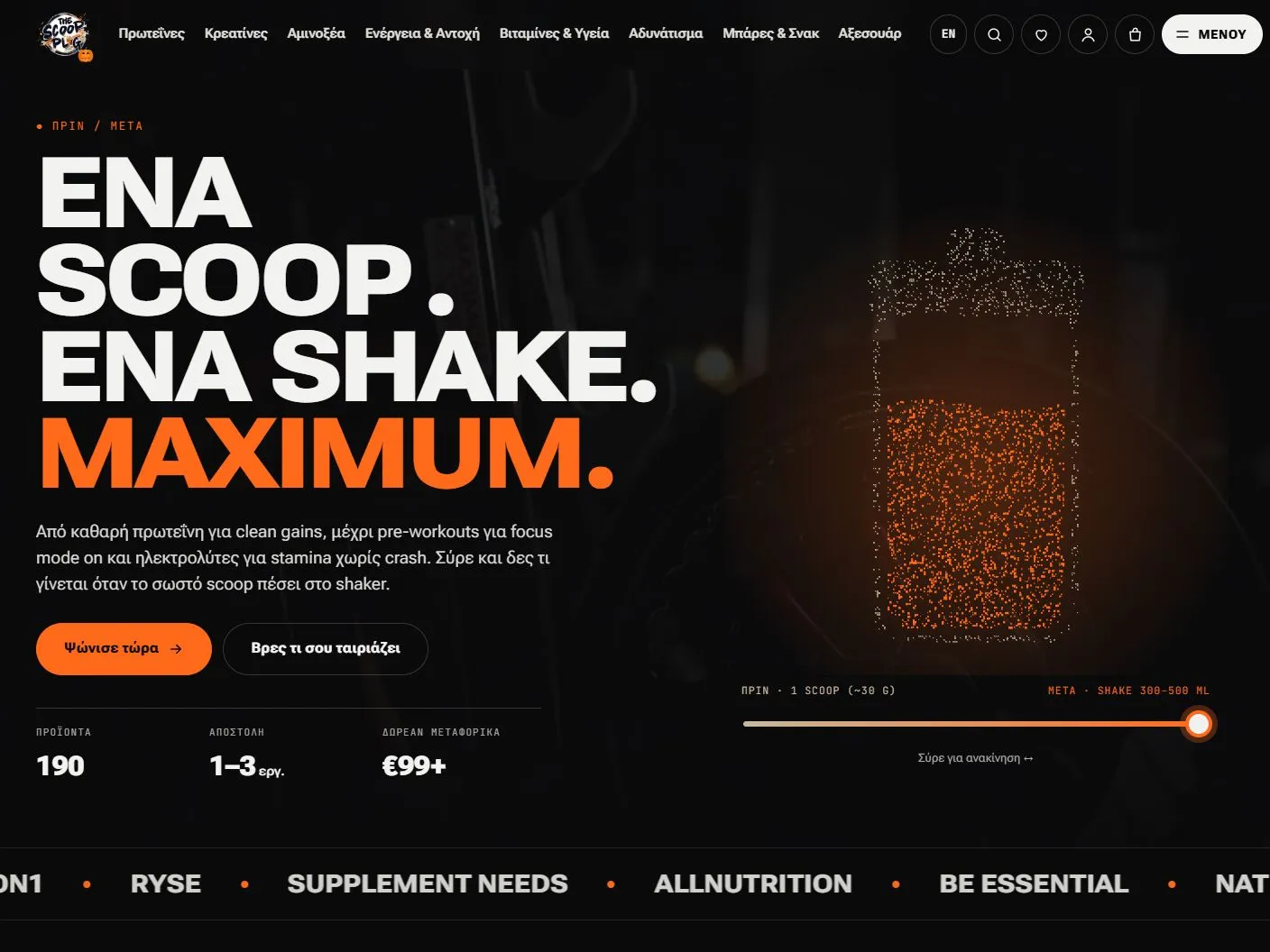
For The Scoop Plug, the immediate operational need and development of the final version were addressed in two phases. An interim upgrade supported continuity while the new implementation progressed.
Laboratory measurements dated 22 October 2026 recorded an improvement in mobile performance from 60 to 96/100. That result concerns the specific tests and is not presented as evidence of increased sales.
The useful lesson is the connection between technical decisions and business needs. A competitive online business needs operational continuity alongside structured improvement.
What should you do next?
Review one important page, complete a test enquiry and check who takes responsibility for it. These three actions can reveal specific opportunities for improvement.
Note what is unclear and where delays occur. Through a conversation with Wechevo, you can organize the next steps toward building a more competitive online business.
Frequently asked questions
Does a business need a large budget to stand out online?
Not necessarily. A small business can start with clear service descriptions, functional communication and useful content for a specific audience. The available budget affects the scope of activity, but choosing priorities remains important. One focused improvement can be more useful than spending across several disconnected initiatives.
Are social media profiles enough without a business website?
Social media can support discovery and communication, while a website provides an organized place for services, projects and information about working with you. The right balance depends on your audience. Consider where potential customers need to find complete information before buying or requesting a quote.
Do I have to use AI to remain competitive?
AI is useful when it serves a specific need and you can check its output. It may help with drafts or repetitive tasks, but it requires suitable information and human oversight. Prioritize improvements to your operations rather than adopting a tool simply because it is popular.
How do I know which change to make first?
Start with an obstacle that directly affects customers and that you can document. A broken form, unclear services or unanswered enquiries are concrete examples. Assess the likely impact, cost and implementation time, then define how you will check whether the change has actually resolved the problem.
Source: developers.google.com
Want a website that brings customers? Talk to the Wechevo team for a free initial assessment.

Athanasios Charatsaris is the founder of Wechevo. He designs and builds websites and e-shops for Greek businesses and leads the strategy that helps them appear on Google and in AI answers (SEO & AEO), as well as Google…
More about the author →